Your operation requires consistent cleaning schedules tailored to specific risks, daily throughput, allergen management, and regulatory visits, including auditable records confirming food safety measures, inspection compliance, and health department standards. The information following give details about essential cleaning protocols.
Key Takeaways
- Brampton sanitation experts assist restaurants, grocery departments, commissaries, warehouses, bakeries, schools, mobile vendors, and allergen-sensitive operations.
- They clean high-touch surfaces, food-contact equipment, kitchens, floors, drains, restrooms, and storage areas using compartmentalized approaches to reduce cross-contamination.
- Proper chemical concentration, compatibility, and contact time are checked by approved specialists, with finishing recorded via checks, inspections, and action records.
- Optimal maintenance plans consider hazard, production volume, switches, spills, and requirements when allocating regular, weekly, and periodic activities by location.
- Insurance, coded instruments, hazard analysis knowledge, public-health knowledge, safety training instruction, testimonials, and assessment-ready hygiene documentation are essential supplier characteristics.
What Brampton Operations Require Food Safety Cleaning?
Any Brampton facility that handles, stores, prepares, packages, or serves food needs sanitation protocols. You must apply it if your facility falls under health department oversight, food regulations, or HACCP requirements. That requirement covers eateries, dining facilities, food distribution centers, supermarket departments, meat markets, fish counters, corner stores, and commercial kitchens.
Compliant food safety cleaning continues to be required in warehouses, food manufacturing plants, cold storage sites, retail bakeries, school nutrition programs, banquet halls, and meal delivery hubs. Seasonal and mobile businesses count too, examples being catering trucks, festival vendors, and pop-up food booths. Your venue needs established hygiene documentation whenever your staff prepare supplies, portion finished foods, reheat dishes, or organize allergen inventory. In Brampton, food safety is not voluntary; it represents lawful, operational, and customer protection standards.
What Do Brampton Cleaning Experts Clean?
You need professional cleaners who sanitize high-touch surfaces, kitchens, floor surfaces, and restrooms to comply with food safety and health regulations. They target these areas because they pose the greatest danger for cross-contamination, slipping risks, and sanitation breaches.
By understanding their service scope, you are able to confirm your facility's cleaning procedures satisfy all operational and regulatory requirements.
Critical High-Touch Surface Disinfection
structure disinfection intervals based on activity levels, infection risk, and how the space is used.
changing cloths consistently, implementing unidirectional workflows, and segregating sanitization equipment according to zone. Doing so maintains your sanitizing protocol measurable, well-documented, and compliance-ready at all times.
Cooking Zones, Walking Surfaces, and Restroom Environments
Brampton cleaning professionals will address kitchens, floors, and restrooms since each space presents different hygiene concerns, slip-and-fall, and community health challenges. In industrial kitchens, you need degreasing on cook lines, equipment exteriors, drains, prep surfaces, and splash zones to reduce contamination and pest pressure.
Floor care that is recorded should equally be anticipated. Technicians clean and remove buildup from tile grout, ceramic surfaces, and vinyl floors, then apply correct drying techniques so you can limit falls and maintain code-compliant conditions. They also handle entry points where dampness and dirt enter the building.
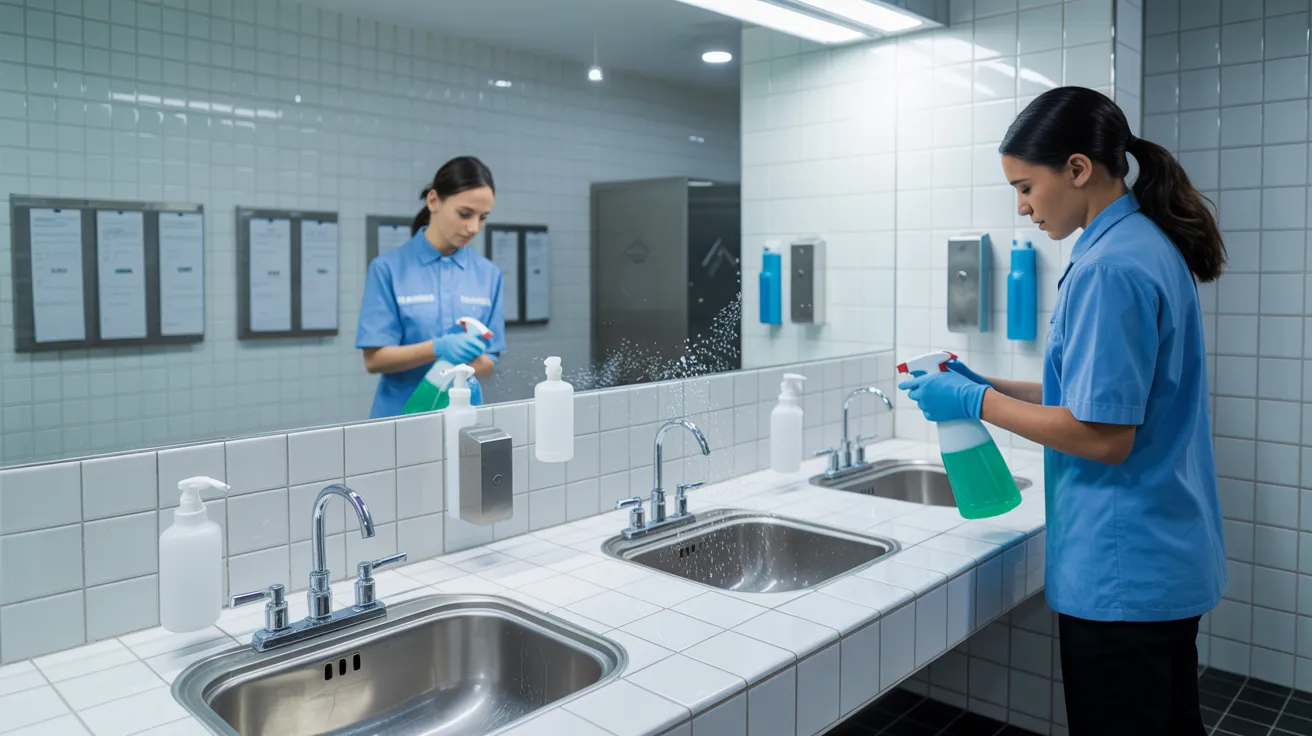
Restroom sanitation involves disinfecting touchpoints, fixtures, partitions, dispensers, and waste containers, replenishing amenities and managing odor. They also service restaurant moprooms, where chemical storage, sink hygiene, and drainage conditions can affect sanitation compliance and staff safety daily.
Why Food Safety Cleaning Matters in Brampton
In Brampton, you must maintain sanitary cleaning practices to meet regulatory standards and pass inspections. You also minimize bacterial spread through proper cleaning of food-preparation surfaces, appliances, and frequently-touched items. Most importantly, you help protect public health by lowering the risk of foodborne illness in your facility.
Food Safety Regulations
Brampton food companies must comply with mandatory safety protocols, so cleaning procedures is vital to meeting health codes, defending customers, and sidestepping penalties. You must maintain sanitary food-contact surfaces, documented cleaning schedules, safe chemical management, and documented employee protocols that meet municipal and provincial inspection expectations.
Excellent cleaning standards supports cross-contamination prevention by reducing buildup on shared equipment plus regularly touched locations. If your cleaning standards slip, you risk infractions, corrective directives, brand harm, and potential service suspension during additional reviews or regulatory actions.
Cross-Contamination Prevention
Meeting health code standards also depends on your ability to prevent cross-contamination during routine food preparation and sanitation. You must separate raw ingredients from ready-to-eat foods, clean work areas after each use, and keep cleaning products separate from food areas. Established guidelines minimize contamination chances and ensure ongoing adherence to health checks.
Building allergen segregation prevents priority allergens from contacting shared surfaces, containers, or equipment. Leverage separate cutting boards, colored implements, and precise instrument labeling so team members won't blend products in cooking or serving.Enforce handwashing after handling raw meat, seafood, eggs, or allergen-containing products. Refresh cleaning cloths frequently, and confirm sanitizer strength with test strips. When your team follows these practices every shift, you foster a cleaner, more secure operation that exceeds Brampton's safety standards daily.
Community Health Assurance
When food safety cleaning weaken, you don't only face inspection setbacks—you raise the likelihood of food contamination striking customers, staff, and the larger Brampton community. You also weaken your role in safeguarding community wellness, especially in high-traffic food premises where pathogens travel quickly through surfaces, equipment, and touchpoints.
You depend on cleaning procedures that eliminate contaminants, effectively sanitize, and ensure effectiveness. This involves maintaining exposure times, utilizing authorized sanitizers, recording schedules, and training employees to meet compliance standards. These actions support pathogen control by reducing microbes before contaminating food or hands. In Brampton, robust sanitation protects at-risk groups, curtails outbreak likelihood, and demonstrates accountability. When you adhere to proper protocols, you exceed requirements—you substantially reduce risk and promote secure food service throughout the city.
Why Is Cleaning Essential for Food Safety Compliance?
Comprehensive cleaning schedules promote food safety compliance by lowering contamination exposure, limiting pathogen development, and positioning your facility in accordance with sanitation requirements under HACCP-based programs and public health regulations. You validate that food-handling surfaces are visibly clean and microbiologically controlled, facilitating documented preventive controls and inspection readiness.
Well-executed cleaning efforts also reinforce allergen mitigation by extracting residues that can provoke undeclared allergen exposure.
How Ought You Plan Commercial Cleaning Services?
cleaning routines or between work periods wherever surfaces contacting food, washrooms, and frequently touched surfaces
Establish weekly or every month maintenance for drain systems, vents, storage racks, and difficult-to-access zones, determined by inspection results and sanitation logs. Dedicate seasonal deep cleaning to cover shutdowns, weather-related soil buildup, or pest-pressure periods
How Do You Choose Brampton Cleaning Experts?
Screen providers initially by their food-safe sanitation requirements—not budget alone. You need to confirm that every company meets CFIA, public health, and HACCP standards for your operation. Demand insurance verification, WHMIS compliance, training records, and management systems. Evaluate technician knowledge of cross-contamination risks, chemical safety, and documented sanitation practices.
You should also assess business dependability and accountability. detailed resource Request references from food facilities in Brampton, then examine response times, corrective-action procedures, and communication standards. Confirm the company supports supplier audits and can present audit-ready records when regulators or third parties request evidence. Check whether equipment is maintained is performed, colour-coded tools are used appropriately, and site-specific hazards are recognized. A competent service protects compliance, product quality, and your brand reputation.
What does a cleaning and sanitation plan encompass?
Develop a written strategy that makes clear every sanitation responsibility, standard, and task prior to production start. You should detail cleaning schedules, authorized chemicals, concentration levels, contact duration, implements, and validation techniques for each zone, surface, and piece of equipment. Incorporate pre-operational inspections, corrective actions, and employee training requirements.
Your plan should also cover cross-contamination prevention, waste disposal, pest management measures, and scheduled documentation for bathrooms, drainage, ground surfaces, and food-handling zones. Specify how you'll separate raw and ready-to-eat processes, help with ingredient tracking, and copyright accurate allergen labeling through validated cleaning between product changes. You should define accountability, preserve signed records, and check results against regulatory standards, HACCP controls, and customer requirements. When gaps appear, revise procedures immediately and retrain staff.
Commonly Asked Inquiries
Are sanitation providers offered for nighttime operations in Brampton properties?
Yes, you can book sanitation coverage to accommodate nighttime operations in Brampton facilities. You'll coordinate nighttime cleaning around production schedules, access requirements, and personnel needs. Providers generally create overnight logistics to minimize disruption, maintain standards, and record finished tasks. You should verify response times, supervision, lockout protocols, and disposal procedures before starting service.
Do sanitation professionals provide hazard containment services?
Yes, you can find Brampton sanitation professionals to offer hazard containment services. They handle hazard containment, evaluate dangers, isolate affected areas, and start rapid decontamination to minimize risk and operational disruption. You should confirm their response times, training certifications, safety procedures, and waste management. If your facility must meet health or food safety regulations, choose a provider that records events, follows compliant sanitation standards, and supports audit readiness.
Do eco-friendly disinfectants work safely on food preparation areas?
Absolutely, plant-based sanitizers remain appropriate for surfaces contacting food when you choose products labeled food safe and meeting regulatory standards. You must verify contact duration, mixing proportions, and rinsing needs prior to application. Plant-derived products decrease harsh chemical exposure, though you must obtain demonstration of efficacy against harmful bacteria. For keeping surfaces residue-free, adhere to precise manufacturer instructions and ensure the sanitizer complies with food sanitation requirements.
Can maintenance plans adjust with seasonal production changes?
Without question, maintenance plans adjust easily for seasonal production changes. Adapt timing, personnel, disinfectants, and testing procedures to correspond to seasonal patterns while maintaining regulatory requirements. Lower production interruptions by organizing sanitization amid equipment transitions, peak volumes, and usage patterns. Also update procedural documents, instruction programs, and facility monitoring to account for temporary risks, novel allergens, or elevated soil levels. Periodic assessments preserve the strategy efficient.
Do professional cleaners coach your team in proper hygiene techniques?
Absolutely, professional cleaning companies frequently provide employee education on hygiene standards. Your staff receives training on proper chemical use, dwell times, cross-contamination prevention, machine takedown, and paperwork. They typically align guidance with HACCP, GMP, and CFIA or local public health standards. Many also perform health inspections to verify compliance, pinpoint weaknesses, and reinforce corrective actions. This enables you to sustain consistent procedures, clear audits, and reduce food safety risks consistently.
Closing Remarks
By partnering with Brampton commercial cleaning and food safety professionals, you aren't simply tidying—you maintain your facility inspection-ready and your practices in compliance. From production areas to kitchen zones, every clean surface and organized space reduces pest risk and prevents costly issues. By scheduling cleanings at appropriate intervals and following a documented cleaning plan, you protect your team, customers, and your credibility. In a heavily controlled environment, hygienic conditions must be prioritized—they're essential to successful operations.